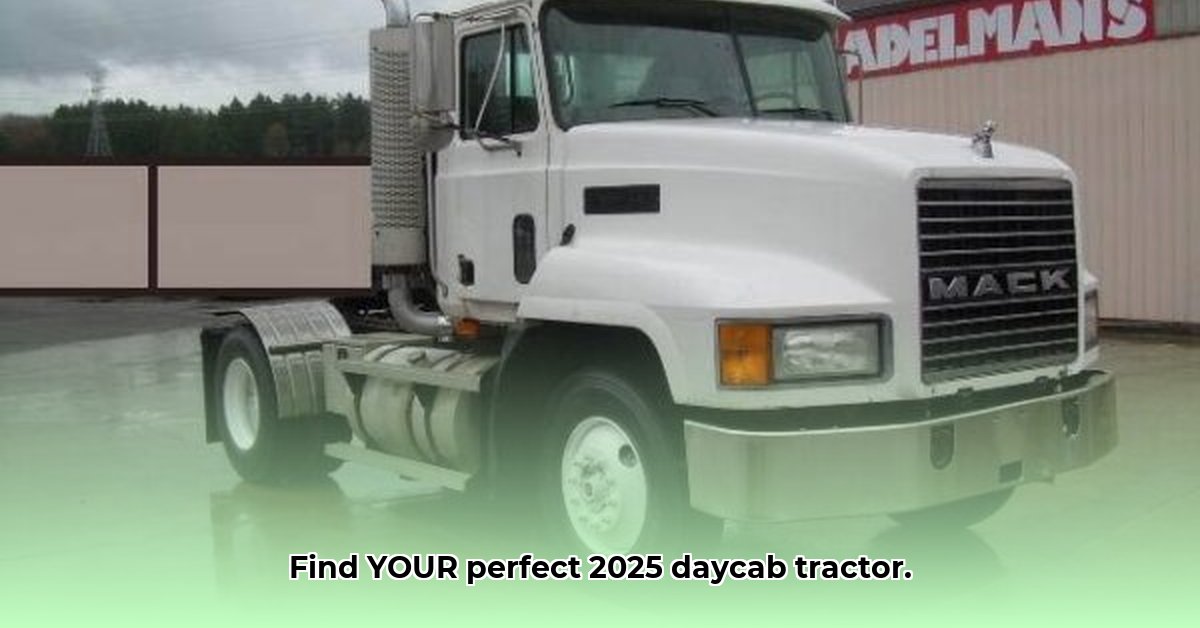
Choosing the right daycab tractor is a critical investment for any short-haul operation. This guide provides a comprehensive overview of key factors, helping you make an informed decision that maximizes efficiency and profitability. For longer hauls, consider the options described in this helpful guide: sleeper cab options.
Understanding Daycab Tractors: Short-Haul Specialists
Daycab tractors, lacking sleeper compartments, are optimized for shorter trips, making them ideal for local deliveries, regional routes, and construction sites. Their maneuverability and lower initial cost make them attractive for specific logistical needs. However, selecting the right daycab requires careful consideration.
Key Factors in Daycab Tractor Selection
Beyond the initial purchase price, several crucial factors influence your choice:
Payload Capacity: Matching Your Hauling Needs
Determining your regular payload weight is paramount. This dictates the necessary truck class (Class 6, 7, or 8); heavier loads necessitate larger, more robust trucks. Always incorporate a safety margin for unforeseen weight increases. What’s your heaviest expected load, and what safety factor are you applying?
Fuel Efficiency: Minimizing Operating Costs
Fuel costs significantly impact profitability. Modern engines with advanced fuel injection systems, coupled with aerodynamic designs, can drastically reduce fuel consumption. How much could you save annually with a 10% improvement in fuel efficiency?
Maneuverability: Navigating Your Operating Environment
Consider your typical driving conditions. For navigating busy city streets, a shorter wheelbase offers superior maneuverability, enhancing safety and efficiency. Do your routes primarily involve congested urban areas or open highways?
Driver Comfort: Enhancing Productivity and Safety
Driver comfort directly impacts productivity and safety. Features like adjustable seating, optimal visibility, and advanced safety systems like backup cameras and blind-spot monitoring contribute to a positive driving experience. What driver comfort and safety features are non-negotiable for your operation?
Maintenance and Reliability: Minimizing Downtime
Reliable trucks minimize costly downtime. Research the maintenance schedules and parts availability for different models. Prioritize brands known for their dependable engineering. What's the cost of a single day of unexpected downtime for your operation?
Choosing the Right Truck Class: Size Matters
The truck's class directly impacts payload capacity and overall size.
- Class 6: Suitable for lighter loads and smaller jobs (e.g., smaller deliveries, local construction).
- Class 7/8: Designed for heavier loads and longer distances, even for short hauls with significant weight.
Remember to comply with regional weight and dimension regulations. Always check local laws and permit requirements before purchasing.
Advanced Features: Enhancing Efficiency and Safety
Modern daycabs often incorporate advanced features:
- Advanced Driver-Assistance Systems (ADAS): ADAS features like lane departure warnings and automatic emergency braking enhance safety and reduce driver fatigue.
- Telematics: Real-time data provides insights into fuel consumption, driver behavior, and maintenance requirements, optimizing operations.
- Automated Manual Transmissions (AMTs): AMTs often improve fuel efficiency and driver comfort compared to manual transmissions.
Total Cost of Ownership (TCO): A Long-Term Perspective
The total cost of ownership (TCO) considers the initial purchase price, fuel costs, maintenance, repairs, insurance, and financing over the truck's lifespan. Don't be misled by low initial prices; higher operating costs or frequent repairs can negate initial savings. Utilize online TCO calculators for accurate estimations.
"Careful TCO analysis is critical for long-term financial health," says Dr. Emily Carter, Professor of Mechanical Engineering at Princeton University, specializing in transportation systems analysis.
How to Compare Total Cost of Ownership (TCO) for Different Daycab Models
Effectively comparing TCO is crucial for informed decision-making.
Understanding Daycab TCO Components
TCO comprises several key components: acquisition costs (including financing), operating costs (fuel, maintenance, licensing, insurance), depreciation, and resale value.
Step-by-Step Comparison
- Define Needs: Specify hauling requirements, dictating required engine power and payload capacity.
- Gather Data: Obtain detailed specifications, fuel economy ratings, maintenance schedules, and warranty information from manufacturers. Research reliability ratings from independent sources.
- Estimate Operating Costs: Project fuel costs based on anticipated mileage and local fuel prices. Include maintenance, licensing, insurance, and driver salaries (if applicable).
- Project Depreciation and Resale Value: Research historical depreciation rates for each model and current market values of used trucks.
- Calculate Total Cost: Sum all costs over your intended ownership period to compare TCO for each model.
Leasing vs. Ownership: Weighing Your Options
Leasing provides predictable monthly payments but potentially higher overall costs. Ownership involves higher upfront investment but offers potential long-term savings depending on resale value. Carefully evaluate your financial situation and risk tolerance.
Finding Your Perfect Match: Prioritize Your Needs
The ideal daycab tractor balances performance, cost-effectiveness, and driver satisfaction. Thoroughly research various models, comparing specifications, TCO, and reliability. Remember, the right truck is the one that best fits your unique hauling needs and business goals.